

Parent Categories




Related Products



Top 10 William Wordsworth Poems You Should Read
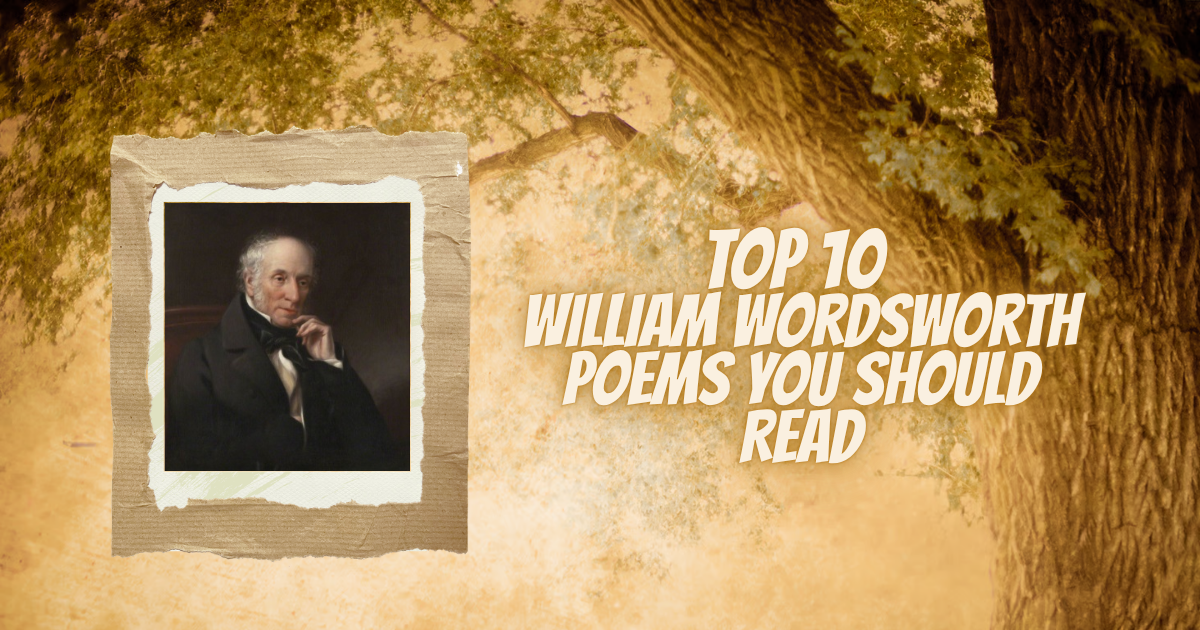 William Wordsworth Poems
Few poets have captured the quiet majesty of nature and the inner stirrings of the human soul as profoundly as William Wordsworth. A central figure of the Romantic movement, Wordsworth transformed ordinary experiences into deeply spiritual reflections, inviting readers not just to observe the world, but to feel it deeply. For many readers, their first encounter with his work comes through ‘The Solitary Reaper’, one of his most famous poems and a beloved part of school curricula, where its haunting melody and emotional depth leave a lasting impression.
If you’re stepping into his world, these ten poems don’t just represent his finest work—they offer immersive experiences, each with its own emotional landscape.
Also read: Still She Rises: The Enduring Power of Maya Angelou
1. ‘Lines Composed a Few Miles above Tintern Abbey’
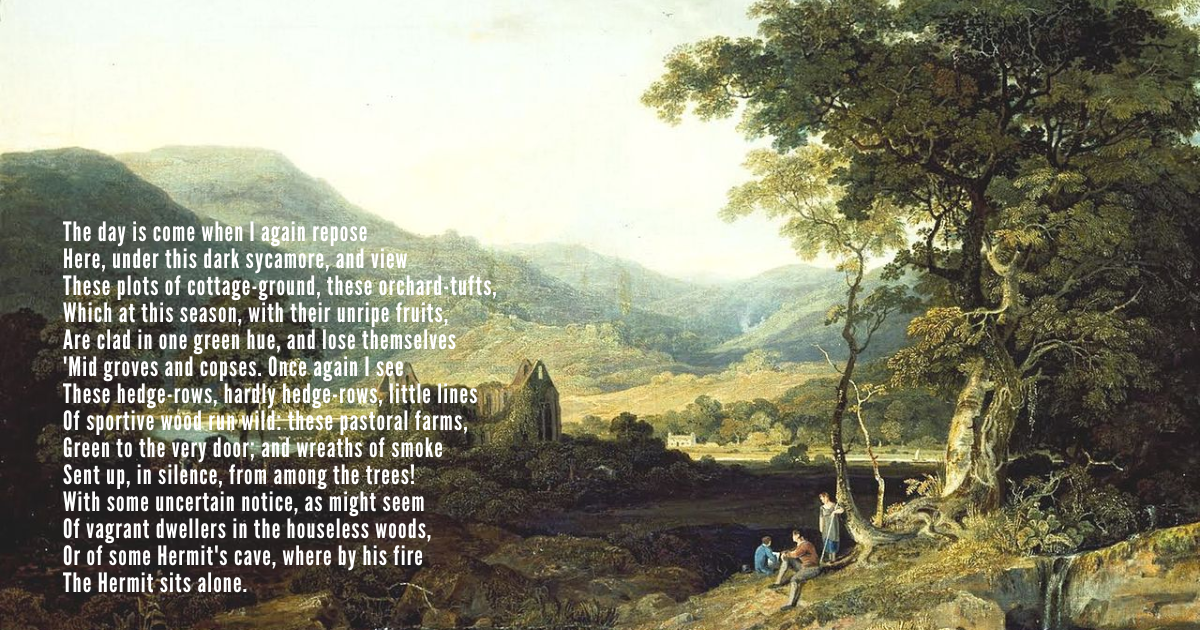
Imagine returning to a place that once shaped your soul—and realising you are no longer the same person. In ‘Tintern Abbey’, Wordsworth revisits a cherished landscape after five years, but puts emphasis on the fact that the real journey is inward. The poem moves from vivid natural imagery to philosophical reflection, showing how nature evolves from a source of youthful thrill to a grounding, almost sacred force. It feels like reading someone’s private thoughts on growth, memory, and healing.
2. ‘I Wandered Lonely as a Cloud’
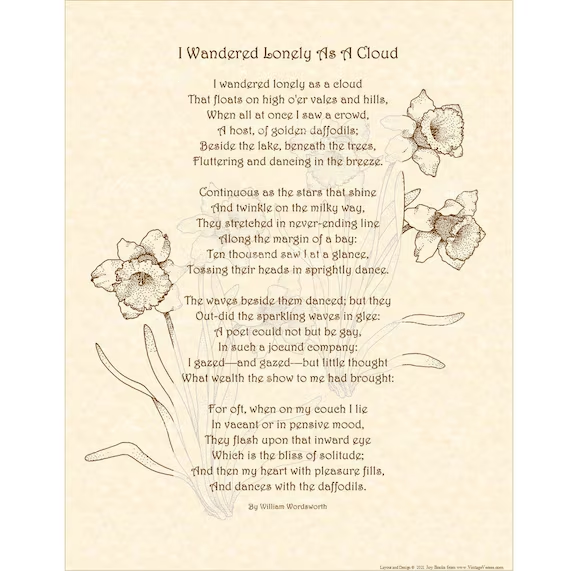 [Image credit: www.etsy.com]
At first glance, Wordsworth portrays a simple walk. But then comes the moment—the sudden vision of endless daffodils swaying in the breeze. Wordsworth captures not just the beauty of the scene, but its afterlife in memory. He shows how the real magic happens later, when the poet lies in solitude and the image ‘flashes upon that inward eye’. It’s a gentle reminder that joy often returns when we need it most, quietly stored in our minds.
3. ‘Ode: Intimations of Immortality’
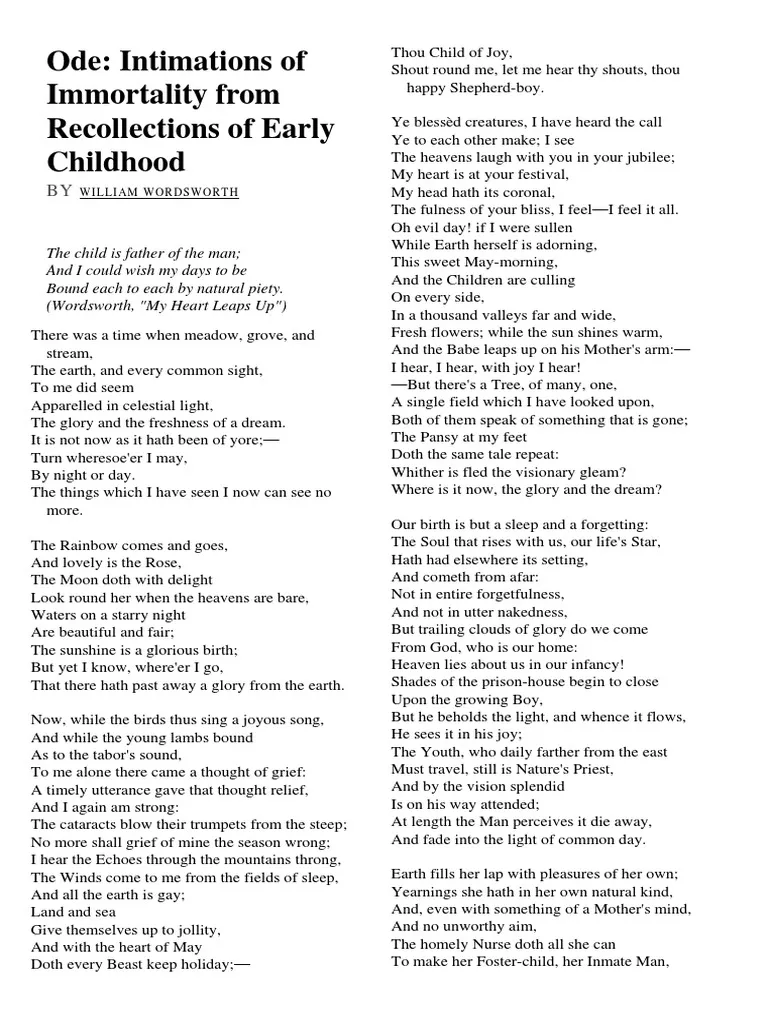 [Image credit: www.scribd.com]
This poem feels like a conversation with time itself. Wordsworth mourns the fading wonder of childhood—the sense that the world once shimmered with something divine. Yet, rather than ending in despair, the poem offers a kind of reconciliation. It suggests that while we lose that celestial glow, we gain something equally meaningful: depth, empathy, and wisdom. It’s a deeply moving reflection on what it means to grow older.
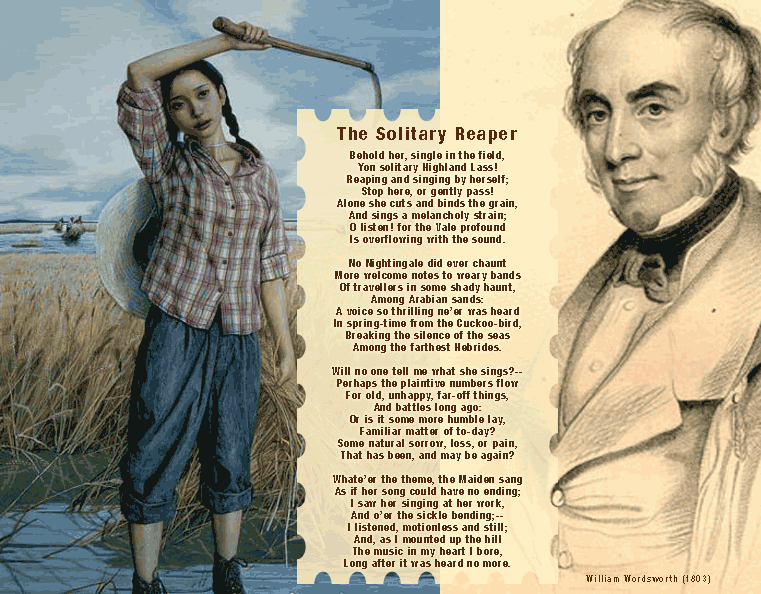
4. ‘The Solitary Reaper’
 [Image credit: studytemple.wordpress.com]
There’s something hauntingly beautiful about hearing a song you don’t understand but still feel deeply. Wordsworth encounters a lone girl singing in a field, and her voice stops him in his tracks. The mystery of her song—its unknown story—makes it even more powerful. It lingers, echoing in his mind long after he has left. The poem captures that rare moment when art transcends language and speaks directly to the heart.
5. ‘My Heart Leaps Up’
 [Image credit: no.pinterest.com/pin/211035932554956341/]
In just a few lines, Wordsworth delivers a truth that resonates across generations. The sight of a rainbow fills him with the same joy he felt as a child, leading to the iconic idea that ‘The Child is father of the Man’. It’s not just about nostalgia—it’s about continuity in life. The poem nudges us to ask: have we preserved our sense of wonder, or have we outgrown it?
6. ‘The Prelude’
 [Image Credit: Knowunity]
Reading ‘The Prelude’ is like stepping inside Wordsworth’s mind. This expansive autobiographical poem charts his journey from a curious child to a reflective poet. You’ll find moments of fear, awe, rebellion, and enlightenment—all shaped by his encounters with nature. It’s not meant to be rushed. Instead, it invites you to wander through it, discovering how identity is slowly, beautifully formed.
7. ‘Lucy Gray’
 [Image credit: www.scribd.com]
This poem reads like a quiet folktale whispered on a winter night. Lucy, a young girl, disappears into a snowstorm, leaving behind only footprints that suddenly vanish. Is she lost, or has she become one with nature? Wordsworth leaves the answer open, creating a haunting blend of innocence and mystery. The poem lingers like a soft echo—beautiful, yet unsettling.
8. ‘Resolution and Independence’
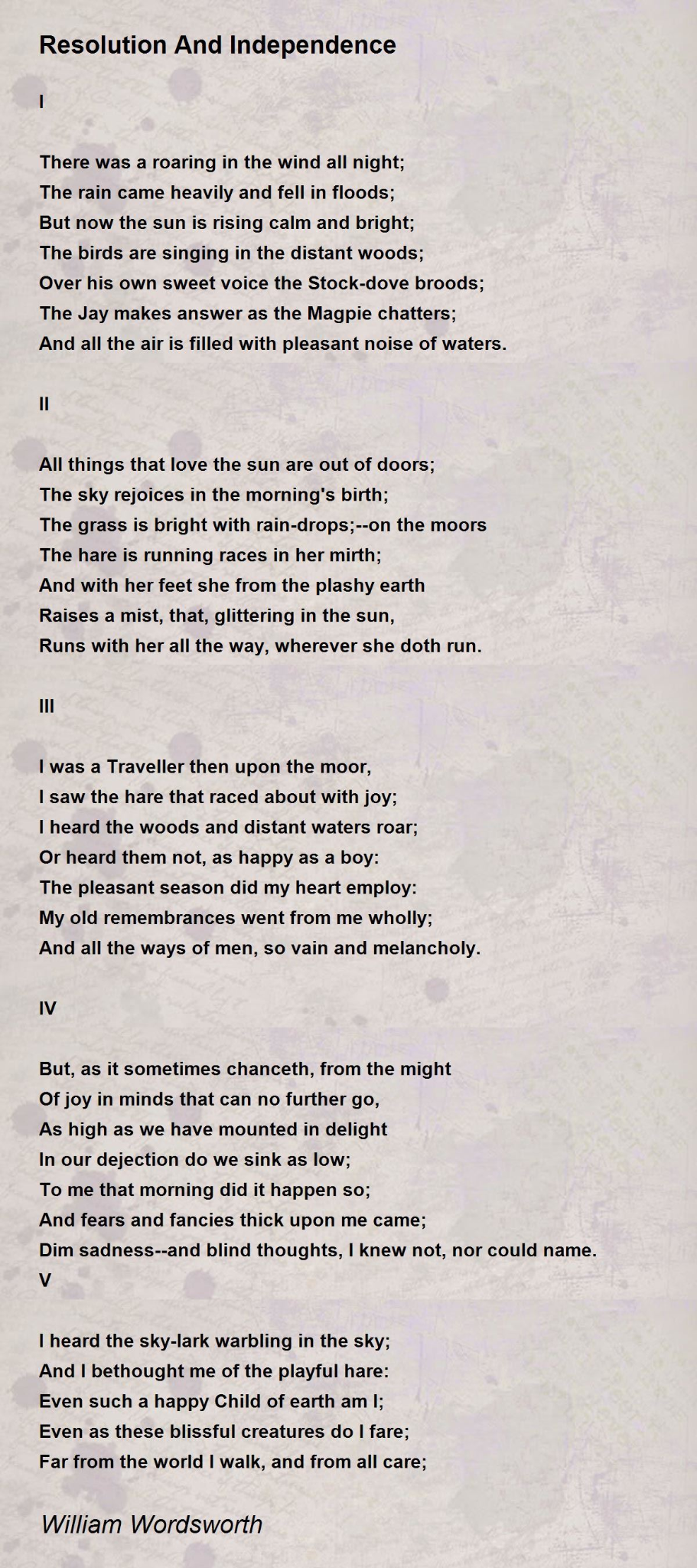 [Image credit: www.poemhunter.com]
Here, Wordsworth opens up about something deeply human—self-doubt. He reflects on the uncertainty and emotional strain of being a poet, only to encounter an old leech-gatherer whose resilience becomes a source of strength.The poem feels almost like a turning point, reminding us that inspiration sometimes comes from the most unexpected people.
9. ‘Composed upon Westminster Bridge’
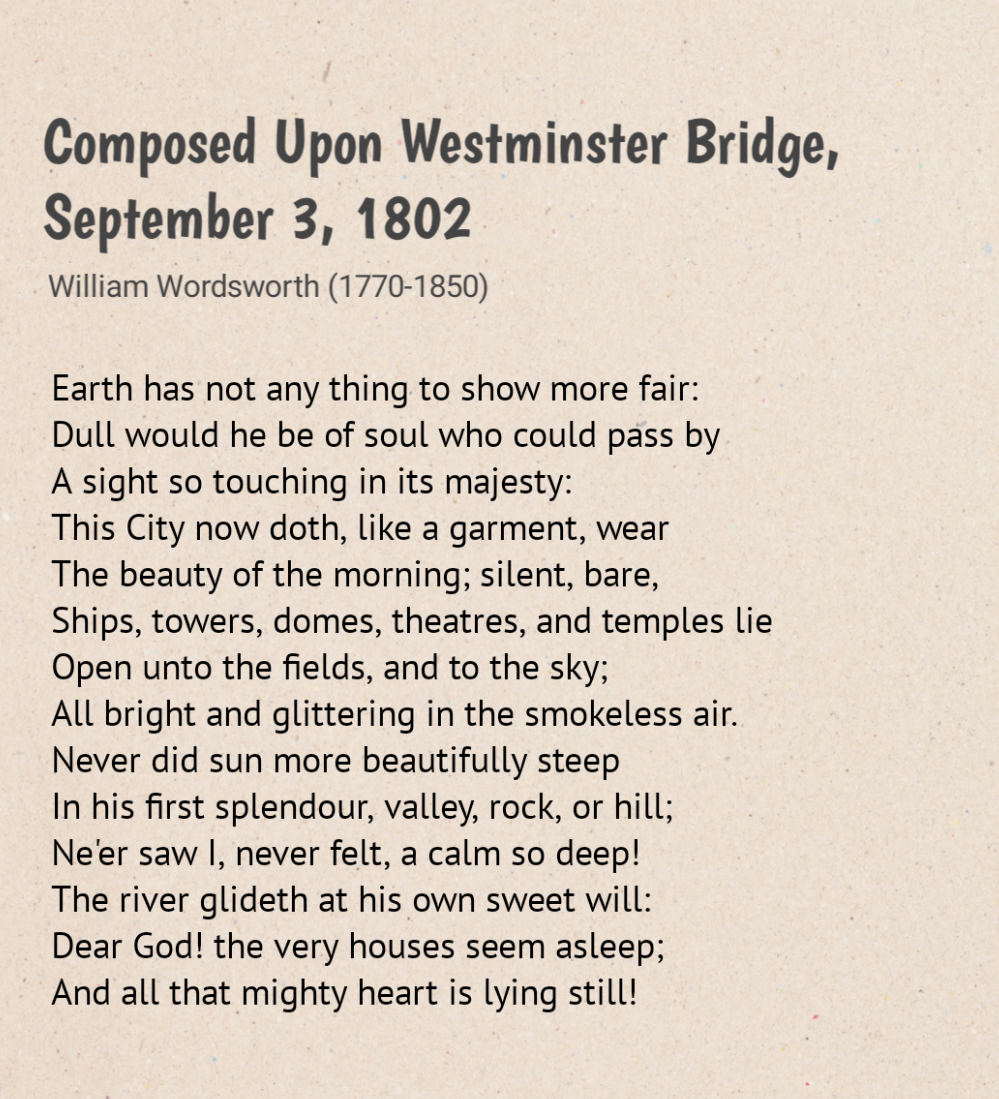 [Image credit: www.reddit.com]
Wordsworth surprises us here. Instead of mountains and lakes, he turns to London—but at dawn, when the city is still and serene. The absence of noise reveals a different kind of beauty, one that feels almost sacred. The poem challenges the idea that nature alone holds wonder; sometimes, even a city can take your breath away—if you catch it in the right moment.
10. ‘We Are Seven’
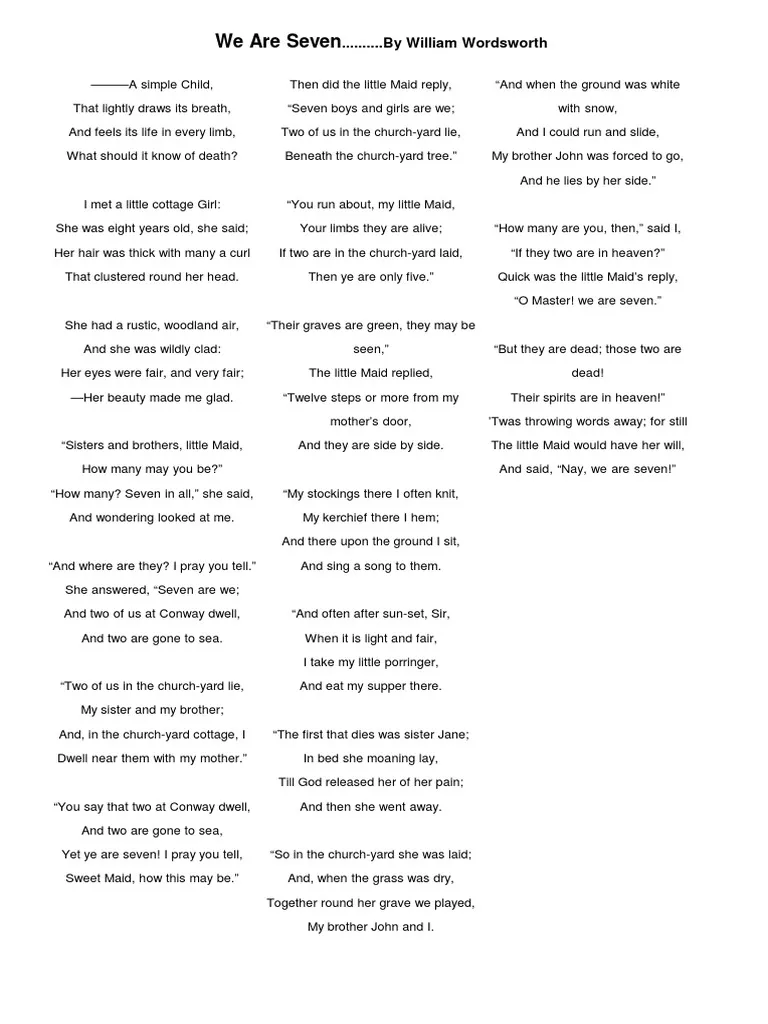 [Image credit: www.scribd.com]
This poem unfolds as a simple conversation, but beneath it lies a profound emotional tension. A young girl insists that her deceased siblings are still part of her family—‘we are seven’. While the adult speaker tries to reason with her, she remains firm in her belief. It’s a touching portrayal of how children perceive loss—not as absence, but as continued presence. The poem gently challenges our understanding of death and belonging.
Why Wordsworth Still Feels Personal
What makes William Wordsworth timeless is his ability to make the ordinary extraordinary. He doesn’t just describe nature—he reveals how it shapes our emotions, memories, and identity.
Reading his poetry today feels almost like a quiet rebellion against the noise of modern life. It asks you to slow down, to notice, and to reflect. And in doing so, you may find something unexpected—not just in the poems, but within yourself.
Because in the end, Wordsworth’s greatest achievement isn’t just writing beautiful poetry—it’s teaching us how to see the world with renewed wonder.
Your next read: From Verona to Hollywood & Bollywood: William Shakespeare in Cinema